Habit Tracker
The best habit tracker is simple, cute, and widget-friendly
Most people who download a habit tracker use it for about two weeks. Then life gets busy, the app slides off the home screen, and the habit quietly disappears. The problem isn't the habit. It's that the tracker became one more thing to manage instead of one small thing to enjoy.
Why most habit trackers fail
There are three patterns that kill almost every habit app:
1. Too much setup upfront
If getting started requires categories, templates, frequencies, sub-habits, and color-coded tags, you've added friction before you've done a single thing. The best habit tracker should take less time to set up than the habit itself takes to do. Thirty seconds or less — and then you're in.
2. Too many taps per use
If logging a habit requires opening an app, navigating to a screen, tapping a confirmation, and saving the entry — that's already four interactions too many. Tracking should feel like a single motion: tap, done, move on. Every additional step is a reason your future self might skip it.
3. It feels like homework
Charts, scores, analytics dashboards, and completion percentages can be useful after the fact — but for daily habits, they make the experience feel clinical. You end up managing tracking rather than building the habit. A habit tracker that looks like a dashboard creates distance between you and the thing you actually want to do.
What "simple" actually means
Simplicity in a habit tracker isn't about having fewer features. It's about reducing the distance between intent and action. When you think of your habit, the next thing that happens should be: done. One tap. No menu navigation. No confirmation dialogs.
Punch cards are inherently simple in exactly this way. There's a card. There are slots. You punch a slot. That's the whole interaction. You don't need to decide anything, navigate anywhere, or think about it — you just punch. And then you can see, immediately, where you stand.
One tap per day
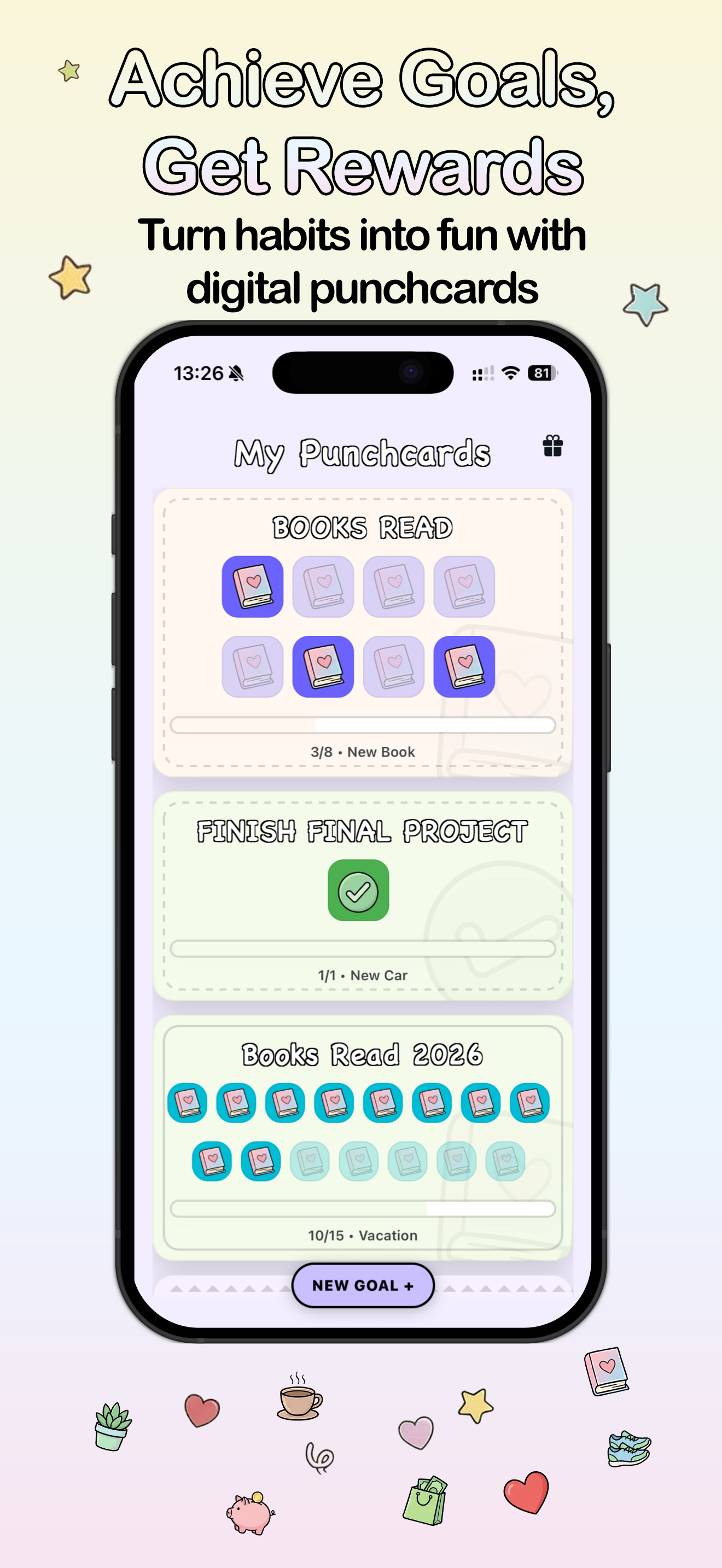
Each punch card in Punchcard is one tap to complete. The slot fills in visually, the progress updates immediately, and you're done. No entry fields, no save button, no confirmation steps. Just a satisfying click and a card that's one step fuller.
Try it free →Why the design of your habit tracker matters more than you think
Apps that feel pleasant to look at get opened more. Apps that feel cold or clinical get avoided. This isn't superficial — it's how human motivation works. You don't reach for things you dread interacting with, even by a few pixels of dread.
A cute habit tracker creates a small positive feeling before you've even done anything. Opening the app feels nice. Looking at your punch card feels encouraging. That small emotional signal is enough to nudge you back, day after day, until the habit becomes something your body just does.
Punchcard is designed to feel like a ritual space, not a productivity tool. Soft, warm colors. Customizable icons you choose yourself. Card styles that feel personal and playful rather than sterile. Everything is built to make you feel good about your goals — not stressed about achieving them.
The widget is the habit tracker
If you take one thing from this article, make it this: put your habit tracker on your home screen. Not as an icon — as a widget.
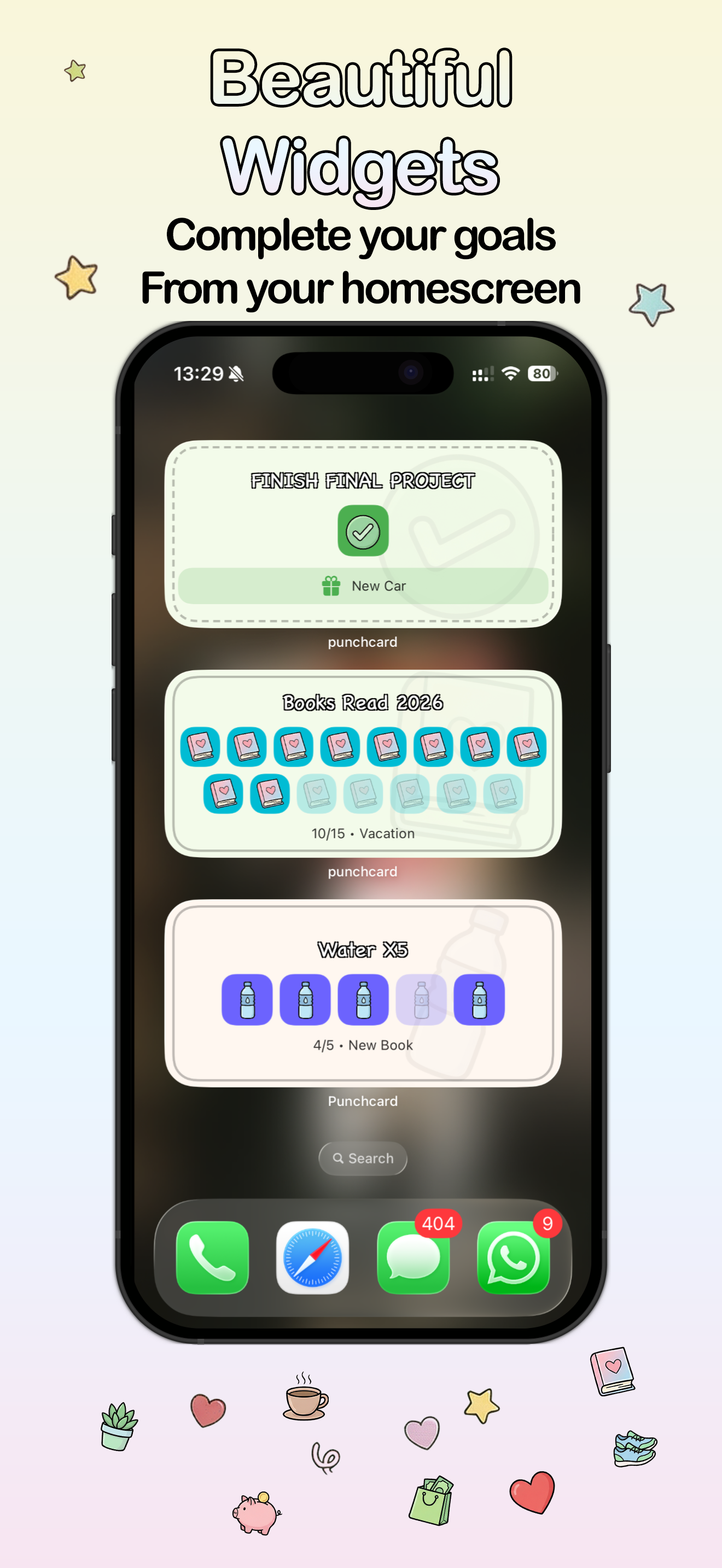
The difference matters enormously. An app icon is an invitation you have to accept. A widget is a presence that meets you where you already are. When your punch card widget lives on your home screen, you see it every time you pick up your phone. You see how full the card is. You see the goal label. You're reminded that the habit matters — without needing a notification, without opening anything, without any active effort at all.
Punchcard's home screen widgets show your live punch card progress and let you tap to punch directly from the home screen. The entire habit loop — see the card, tap to punch, move on — happens in under three seconds without ever opening the app. That's the right amount of friction: close to none.
Punch cards: gamification without the game
Gamification has a reputation problem. Points, leaderboards, and achievements can make habit tracking feel competitive in ways that create anxiety rather than motivation. But punch cards are different — they're gamified just enough to feel rewarding, without ever feeling like a game you could lose.
There's no penalty for missing a day. No streak that resets dramatically. No score that makes you feel behind. There's just a card, slowly filling up, with a reward waiting at the end. You can step away and come back. The card will be exactly where you left it. That structure creates forward momentum without the anxiety of "breaking the chain."
Each card also has a personal reward attached — something you define. A new book. A coffee. A rest day. A small purchase you've been holding off on. The reward is what turns a habit into a goal. You're not just logging behavior; you're working toward something. That shift in framing makes a real difference in whether you keep going.
How to actually build a habit with Punchcard
The simplest way to start is one habit, one card. Not a full routine system. Not three cards at once. Just one thing you want to do consistently, with a reward you'd actually be happy to earn.
Set it up in 30 seconds. Add the widget to your home screen. Punch the card the first time. Come back tomorrow and punch it again. That's the entire practice. Punchcard doesn't ask for anything beyond that — because anything beyond that would become the reason you stop.
When your first card fills up, start a second one. Add a friend to a Group Card if accountability helps you. Set a reminder for the time of day the habit makes most sense. The features are there when you want them — but the core experience is always just: see card, punch card, feel good.
Start your first punch card today
Free to download. No account needed. Set up your first habit in under a minute — then add the widget.
Download on the App Store →