Walking is easy to prescribe badly. A fixed challenge assumes the same starting point for someone who sits most of the day and someone already walking forty minutes. This plan starts with one comfortable baseline and uses proportions, so the month belongs to the person doing it.
Walking can contribute to the aerobic activity recommended for adults, and even some activity is better than none. The CDC notes that health benefits begin before a person reaches the full weekly guideline. This plan is general information, not medical advice.
Before day one: find your baseline
Walk at a comfortable pace and stop while you still feel you could continue. Record the minutes. That is your baseline walk, labeled B in the plan. If B is ten minutes, a 1.5B walk is fifteen. If B is twenty, 1.5B is thirty.
Choose a route with a simple early exit. If pain, dizziness, chest discomfort, or unusual shortness of breath appears, stop and seek appropriate medical advice.
The four kinds of day
| Code | Walk | Purpose |
|---|---|---|
| E | 0.75 × baseline, very easy | Keep the cue with less load |
| B | Your comfortable baseline | Repeatable default |
| L | 1.25–1.5 × baseline | Gradual endurance |
| R | Rest or ordinary movement | Recovery |
The 30-day walking plan
| Week | Days | Pattern |
|---|---|---|
| 1 | 1–7 | B · E · B · R · B · E · L |
| 2 | 8–14 | B · B · E · R · B · L · E |
| 3 | 15–21 | B · L · E · R · B · L · E |
| 4 | 22–28 | B · L · E · R · L · B · E |
| Finish | 29–30 | Favorite route · easy celebration walk |
The plan has fewer dramatic increases than most online challenges. That is deliberate. A repeatable walk has more value than a heroic day followed by soreness and avoidance.
Should you use time, distance, or steps?
Time is easiest when terrain and pace vary. Distance is useful for a fixed route. Steps are convenient when a phone or watch already records them. Convert a step target with the steps-to-miles calculator, but do not treat its estimate as exact—stride length changes with speed and terrain.
You do not need 10,000 steps to begin. Add a manageable walk to your current day and let the baseline move gradually.
Make the walk easier to start
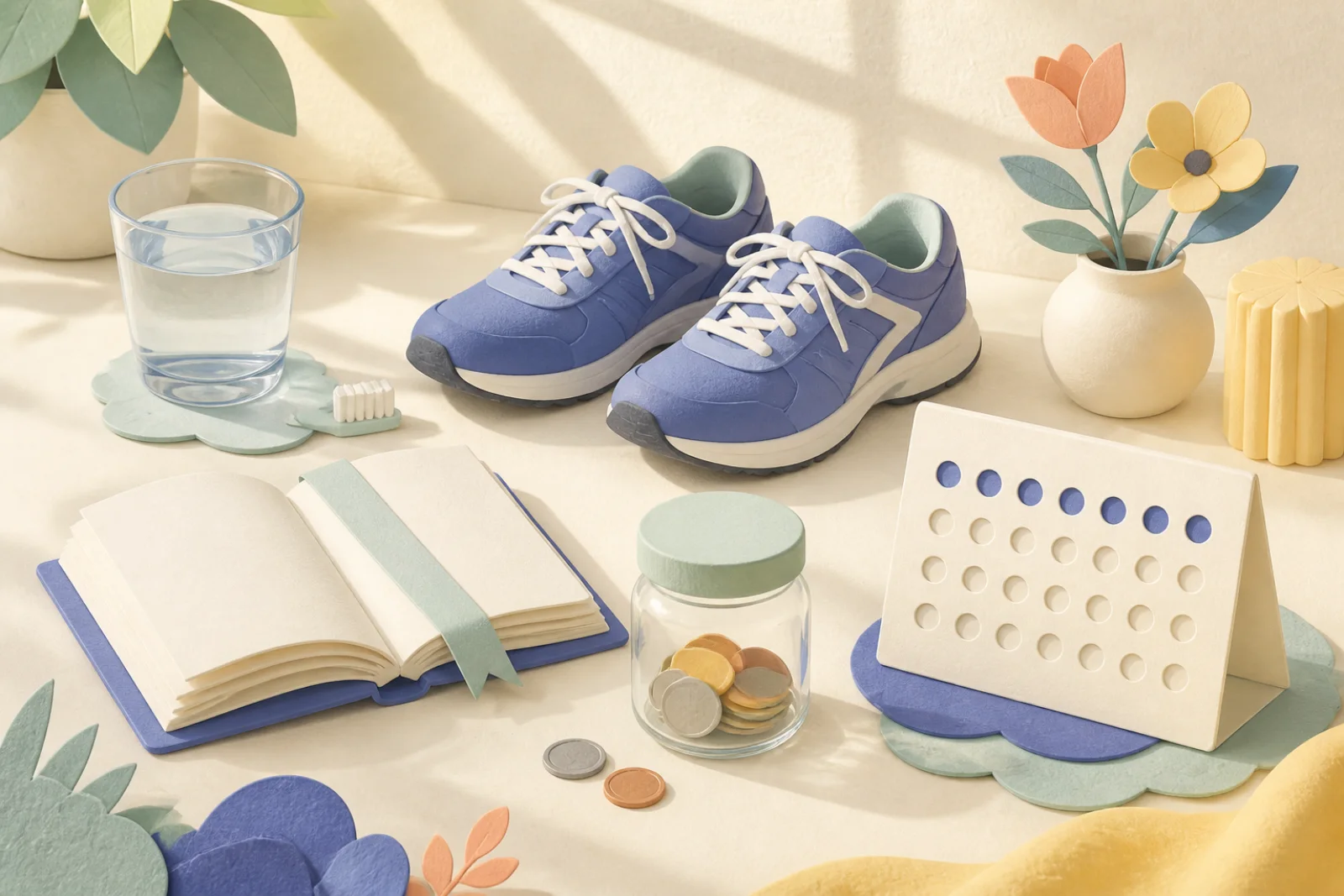
- Put shoes beside the cue: desk, door, or lunch bag.
- Choose a default route that requires no planning.
- Use the same start event, such as closing the laptop.
- Keep an indoor alternative for dangerous weather.
- Pair the walk with music or a podcast only if that keeps the environment safe.
This is habit stacking in ordinary clothes: the existing event carries the new action.
What to do after a missed day
Do not double the next walk. Continue with an easy or baseline day, depending on how you feel. One gap does not remove the adaptation from previous walks. The challenge is a plan, not a debt ledger.
After day 30
Review which time, route, and cue produced the most consistent walks. Keep three baseline walks a week, or repeat the final two weeks with a slightly longer baseline. If the challenge made walking feel worse rather than easier, reduce the dose or get individualized advice.

One walk, one punch
Create a thirty-punch walking card and keep the next walk visible on your iPhone home screen.

General health information only. Adjust for your fitness, environment, disability, pregnancy, injuries, and medical conditions. Seek qualified advice when needed.
Frequently asked questions
How long should a beginner walk?
Start with a comfortable duration you can repeat, even if it is five or ten minutes.
Do I need 10,000 steps?
No. Progress from your current baseline rather than using one universal target.
What if I miss a day?
Continue with an easy or baseline day. Do not double the next walk.
Is walking enough exercise?
Walking contributes to aerobic activity. Adults also benefit from muscle-strengthening activity, and individual needs vary.